


Synopsis
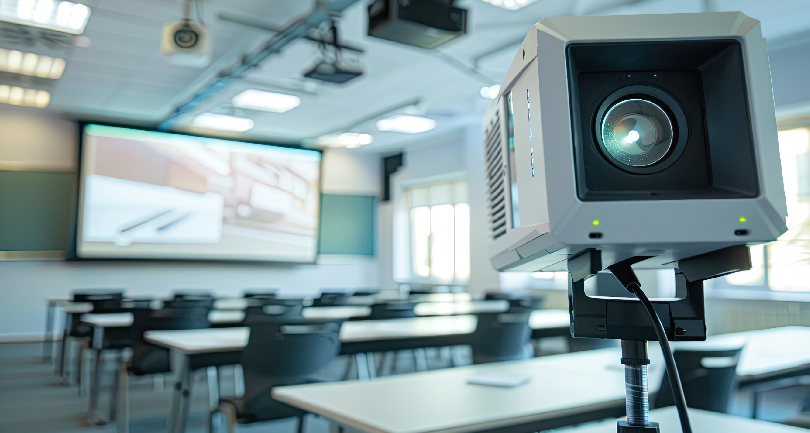
In modern hybrid lecture halls, active training facilities, and corporate conference spaces, capturing natural dialogue requires an automated camera system that can shift focus to frame participants the moment they contribute to the discussion. The BR-MTC12X tracking camera addresses this structural requirement, functioning as an intelligent visual engine optimized for flawless advanced AV integration. Utilizing a highly advanced all-in-one design, the camera delivers native HD 1080P visual feeds across three separate channels simultaneously via IP, HDMI, and SDI lines, allowing local monitors and cloud servers to receive clean video without external splitters. The system features a built-in intelligent teaching tracking and face-recognition engine that can be configured before production specifically for student tracking, enabling smooth automated panning toward a speaking participant without needing a separate tracking host. It integrates a changeable lens block on its wide-angle panorama sensor to match standard M12 mount optics, alongside a vertically adjustable viewing angle lock to speed up physical calibration in rooms of any footprint. By removing manual camera operators from the equation, this high-performance system bridges human interaction directly into modern enterprise video conferencing systems and digital recording archives with absolute visual fidelity.
Table of Content
-
The Visual Mandate for Multi-Party Discussion Tracking
-
The BR-MTC12X – Intelligent Participant Tracking Architecture
-
Uncompromised Signal Distribution: Parallel Three-Channel Outputs
-
Adapting Optical Fields via a Changeable Panorama Lens Layout
-
Streamlining Live Interaction in Modern Video Conferencing Systems
-
The Bronx Brand Quality Promise: Engineering Unbacked Collaboration
-
Scalable System Design and Enterprise Integration Frameworks
The Visual Mandate for Multi-Party Discussion Tracking
In contemporary corporate training hubs, municipal council chambers, and interactive university lecture halls, the success of a meeting depends heavily on capturing both the main presenter and the active audience. When a remote participant tunes into a multi-site presentation, staring at a static shot of the front podium while an audience member speaks from the back of the hall creates a disconnected experience. Yet, hiring manual video editors to manage real-time camera angling for everyday business events introduces extreme operational costs and coordination overhead. The BR-MTC12X tracking camera systematically resolves this barrier by incorporating a smart dual-sensor configuration that automates room framing based on face recognition and motion vector tracking, bringing broadcast-grade group interaction to corporate networks.
The BR-MTC12X - Intelligent Participant Tracking Architecture
The core operational benefit of this automated capture device is its ability to transition its focus smoothly to any audience member or trainee who begins speaking. Traditional tracking systems require rooms to be wired with complex array grids, pressure pads beneath chairs, or heavy desktop microphone sensors that add immense installation complexity to the space.
Reconfiguring Advanced Image Recognition for Audience Focus
The internal processing hardware of the BR-MTC12X eliminates these external hardware dependencies by running intelligent teaching tracking and facial topology identification routines directly within its own dual-sensor processor. Because different cameras are assembled before production to optimize for either teacher tracking or student tracking, the device can be specified specifically to monitor the audience gallery. Using an integrated wide-angle panoramic lens alongside its primary 12x optical zoom PTZ tracking head, the camera continuously scans the seating rows. The moment a student or participant stands up or shifts position to speak, the system detects the movement profile instantly, guiding the PTZ lens to deliver a smooth, natural close-up frame with perfect clarity and zero operational lag.
Uncompromised Signal Distribution: Parallel Three-Channel Outputs
Fulfilling the requirements of complex modern media networks demands flexible parallel connectivity paths to stream video across multiple enterprise platforms concurrently. The tracking camera satisfies this requirement by utilizing a highly efficient, parallel output matrix built into a robust all-in-one design, capable of broadcasting a clean 1080P video stream over IP network lines, low-latency HDMI ports, and broadcast-grade 3G-SDI coaxial connections at the exact same moment. This allows local tech personnel to run the high-speed HDMI output directly to the room’s local presentation monitors, send the secure SDI feed hundreds of feet away to a centralized archiving center, and map the IP network stream straight into global video conferencing systems without needing to add external conversion hardware.
Adapting Optical Fields via a Changeable Panorama Lens Layout
Training rooms and educational facilities vary wildly in their architectural scale, ranging from narrow corporate huddle spaces to deep, wide-set learning theaters. A fixed-angle camera panel often fails when deployed across these varying layouts, producing blind spots along the room’s edges or failing to map the rear seating rows. The BR-MTC12X counters this layout constraint by incorporating a flexible, changeable lens architecture on its built-in panoramic tracking sensor. Fully compatible with standard M12 mount lenses, the camera allows system integrators to swap out the stock panoramic glass for wide-angle optics in wide, shallow rooms or high-magnification telephoto variants in deeper halls, ensuring the face-recognition algorithm receives a perfectly proportioned view of the participant grid.
Vertical Calibration Precision via an Adjustable Viewing Angle
To simplify mechanical installation and cut down on hours of grueling on-site engineering adjustments, the camera’s structural frame houses a flexible physical layout calibration tool. The integrated panorama camera module features a mechanically lockable, vertically adjustable viewing angle that tilts smoothly from -15 degrees to 0 degrees. This specific technical refinement allows installation crews to mount the camera safely at varying heights—such as flush against low soffits, mounted onto balcony ledges, or suspended overhead from structural ceiling drop rods—while still ensuring the baseline tracking zone maps the student seating rows flawlessly, drastically lowering ongoing facility deployment costs across your entire branch network.
Streamlining Live Interaction in Modern Video Conferencing Systems
For enterprise network administrators, the BR-MTC12X serves as a highly intelligent, self-directed visual endpoint that integrates seamlessly into larger audio and video conferencing layouts. Because the camera operates over open control protocols, it can be combined smoothly with Bronx digital conference networks or central room automation switchers to activate intelligent, multi-camera macros based on active microphone triggers. This deep technical harmony transforms a basic meeting room into a fully automated collaborative theater, allowing corporate trainers and students to focus entirely on their dialogue while the hardware silently handles the broadcasting logistics with perfect operational stability.
The Bronx Brand Quality Promise: Engineering Unbacked Collaboration
At Bronx, our core engineering objective is to strip away technical complexity from corporate and academic collaboration, replacing cumbersome setups with intelligent, highly responsive audio-visual architecture. We design premium communication assets that empower enterprise networks, government bodies, and academic institutions to project their message with uncompromised clarity and absolute professional authority. Every product in our expansive catalog is built from premium components and undergoes exhaustive laboratory testing to ensure maximum operational longevity, low power consumption, and reliable performance under challenging real-world conditions. We stand fully dedicated to helping your organization connect, innovate, and lead without being constrained by technical limits or infrastructure hurdles.
Scalable System Design and Enterprise Integration Frameworks
Our complete collaborative portfolio spans from large-format active LED display walls and automated tracking switchers to ultra-responsive, tracking PTZ cameras. We specialize in providing scalable, future-proof systems that blend into your everyday workflow, maximizing staff productivity and sharpening communication efficiency across all branches. By choosing Bronx as your unified AV hardware partner, your enterprise aligns with an elite global brand committed to world-class product design, strict quality control, and dependable technical excellence. We provide comprehensive systems that keep your teams perfectly synchronized, allowing you to run your operations with absolute confidence.
FAQs
What are the infrastructure benefits of the camera's triple-output all-in-one design?
The integrated all-in-one design allows a single tracking camera to process and transmit high-definition video over three separate physical formats simultaneously, including IP network streams, HDMI links, and broadcast-grade 3G-SDI coaxial lines. This parallel output capacity removes the requirement to install external signal splitters or matrix converters, allowing a single camera to supply video to local presentation monitors, centralized media recorders, and remote web feeds without adding data latency.
How does the camera handle student tracking without requiring physical room sensors?
The camera utilizes proprietary face-recognition and motion-vector processing running behind an integrated secondary panorama sensor, which is a variation of our intelligent teaching tracking technology optimized for audience areas. Because different cameras are assembled before production to achieve teacher tracking or student tracking, this specialized variant monitors the seating rows continuously, directing the primary PTZ lens to pan and zoom onto active participants autonomously based entirely on human geometry changes.
Why is a changeable lens system valuable for student tracking cameras?
Having a flexible changeable lens mount supporting standard M12 optics on the panorama tracking sensor allows systems designers to modify the camera’s spatial field of view based on individual room dimensions. This means a university can buy identical camera hardware across an entire campus footprint, fitting wide-angle optics for tight huddle training desks or high-magnification narrow telephoto lenses for deep-tiered auditoriums, streamlining ongoing maintenance inventories.
How does a vertically adjustable viewing angle speed up the mechanical installation process?
The integrated panorama sensor features a mechanically lockable, vertically adjustable viewing angle tilting from -15 degrees to 0 degrees, allowing setup technicians to calibrate the base tracking frame precisely from varying heights. This flexibility means the unit can be mounted safely onto low ceilings or high back walls while still maintaining a clear, undistorted mathematical view of the participant rows, cutting down troubleshooting hours during complex advanced AV integration projects.
Does this tracking camera require custom software driver packages to operate with web codecs?
No. Operating through standard broadcast connectivity paths, the camera interfaces natively with existing enterprise video conferencing systems and network recorders without requiring proprietary driver packages. Its parallel IP and HDMI ports match industry-standard protocols instantly, ensuring that when it is deployed alongside standard room codecs or media mixers, the video feed passes through with clean plug-and-play simplicity during live calls.
Can the camera distinguish between a student standing up to speak and someone walking past?
Yes. The built-in image recognition software running behind the tracking array is specifically optimized to ignore background environmental distractions like writing on whiteboards, glowing projector animations, or swinging door movements. It locks tightly onto human body geometries and facial structures, ensuring that the primary PTZ lens continues tracking the moving presenter smoothly during dynamic, fast-paced audio and video conferencing events.